
Will an Underground Shelter Shield EMP? What to Know About Electromagnetic Pulse Protection
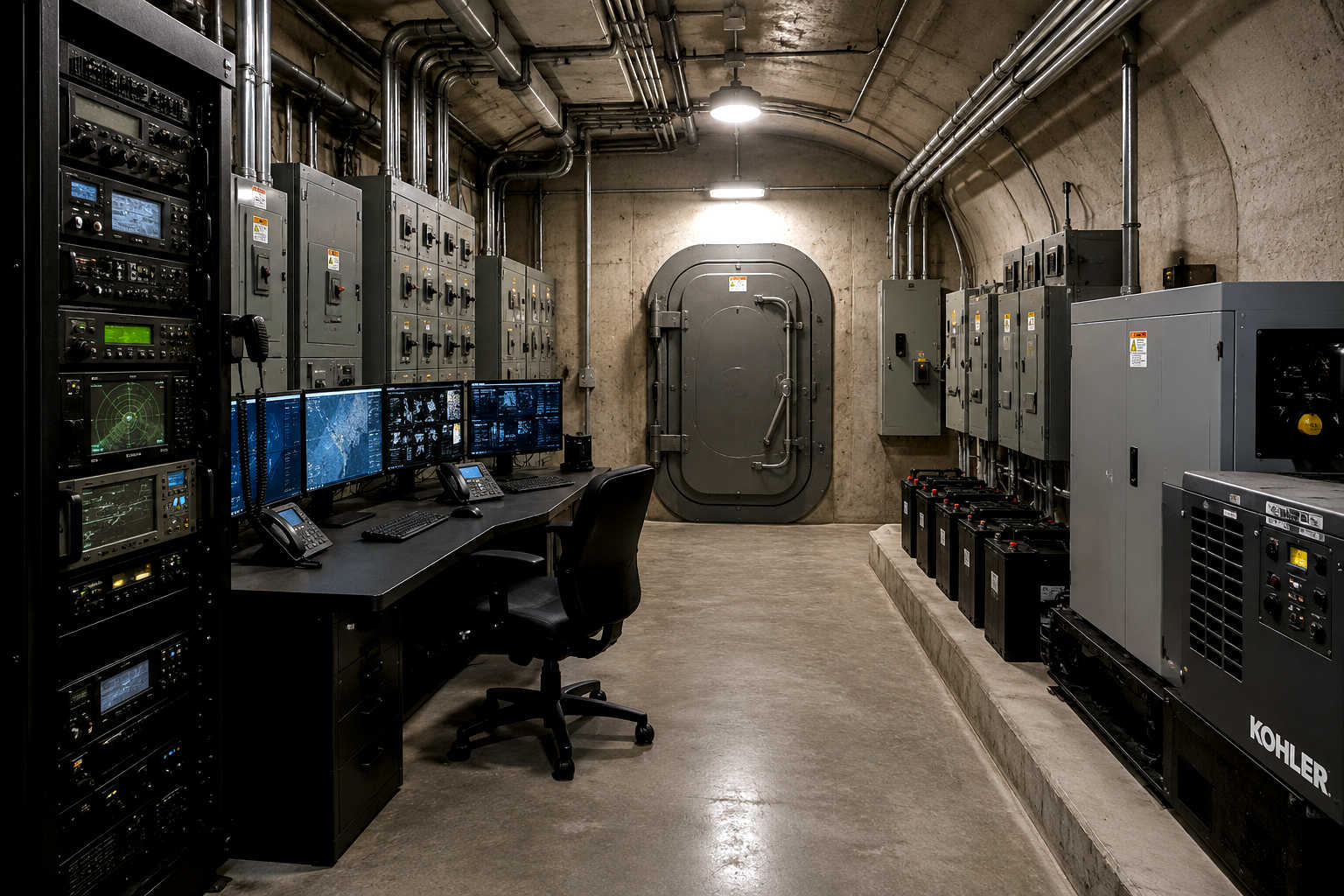
Modern civilization depends on fragile systems. Electrical grids, communication networks, transportation systems, water infrastructure, and digital technology all rely on electronics that operate without interruption. Most people never think about how vulnerable those systems are until they fail. An electromagnetic pulse event, commonly called an EMP, has the potential to disrupt large portions of modern infrastructure within seconds.
In a world built around connected technology, even a short-term loss of power and communication can create widespread instability. That reality has led many property owners, preparedness planners, and security-focused organizations to ask an important question: will an underground shelter shield EMP? The answer is more complicated than many people assume. While underground construction can provide some advantages, EMP-resistant underground shelters require carefully planned electrical shielding, hardened systems, protected wiring pathways, and reinforced infrastructure designed to reduce vulnerabilities. This is where professional underground bunker construction becomes important.
Many people assume that placing a shelter underground automatically protects everything inside from electromagnetic pulse damage. In reality, depth alone does not guarantee protection for electronics, communication systems, backup power infrastructure, or ventilation controls. EMP-resistant underground shelters require carefully planned electrical shielding, hardened systems, protected wiring pathways, and reinforced infrastructure designed to reduce vulnerabilities.
This is where professional underground bunker construction becomes important. At Dynamic Structural Integration, underground shelters are approached as engineered protective environments rather than simple underground rooms. Every component must work together under demanding conditions. A shelter designed for long-term protection must account for more than structural strength alone.
Can an Underground Shelter Protect Against an EMP?
An underground shelter may provide partial protection against an electromagnetic pulse, but depth alone is not enough to fully shield sensitive electronics and critical systems. True EMP protection depends on structural design, electrical shielding, grounding methods, shielded communication systems, and hardened infrastructure integrated into the shelter itself.
What Is an EMP?
An electromagnetic pulse is a burst of electromagnetic energy capable of damaging or disrupting electrical systems and electronic devices. EMP events can originate from several sources, including high-altitude nuclear detonations and severe solar storms. According to CISA, electromagnetic pulse risk to critical infrastructure is an important part of national resilience planning.
A nuclear EMP event can affect:
- Power grids
- Communication systems
- Vehicles with electronic controls
- Medical infrastructure
- Computer systems
- Industrial control networks
The greater the dependence on electronics, the greater the vulnerability. Modern infrastructure operates through interconnected systems that rely on continuous electrical function. A large-scale EMP event could interrupt those systems across wide geographic regions.
Will an Underground Shelter Shield EMP?
An underground shelter may reduce some exposure to electromagnetic energy because soil, concrete, and structural mass can help weaken portions of the pulse. However, underground placement alone does not create full electromagnetic pulse protection.
The most vulnerable points are often not the walls themselves, but the systems connected to the shelter:
- Electrical wiring
- Antennas
- Ventilation systems
- Power connections
- Communication lines
- Backup generators
Without engineered shielding measures, electromagnetic energy may still travel through conductive pathways into critical systems inside the shelter.
At Dynamic Structural Integration, underground shelters are approached as engineered protective environments rather than simple underground rooms.
EMP Protection Comparison Table
| Shelter Feature | Basic Underground Shelter | EMP-Hardened Shelter |
|---|---|---|
| Earth Shielding | Partial | Enhanced |
| Electronics Protection | Limited | Hardened Systems |
| Communication Systems | Vulnerable | Shielded |
| Backup Power | Standard | EMP-Protected |
| Ventilation Controls | Basic | Shielded Components |
| Electrical Infrastructure | Standard Wiring | Protected Pathways |
| System Redundancy | Minimal | Integrated Backup Systems |
Why Depth Alone Does Not Guarantee EMP Protection
One of the most common misconceptions about underground shelters is that being underground automatically protects electronics from electromagnetic pulse damage. While underground construction may reduce some exposure, electrical systems remain vulnerable if they are not properly shielded.
EMP energy can enter through:
- External power lines
- Communication cables
- Metal piping systems
- Ventilation penetrations
- Connected electronic infrastructure
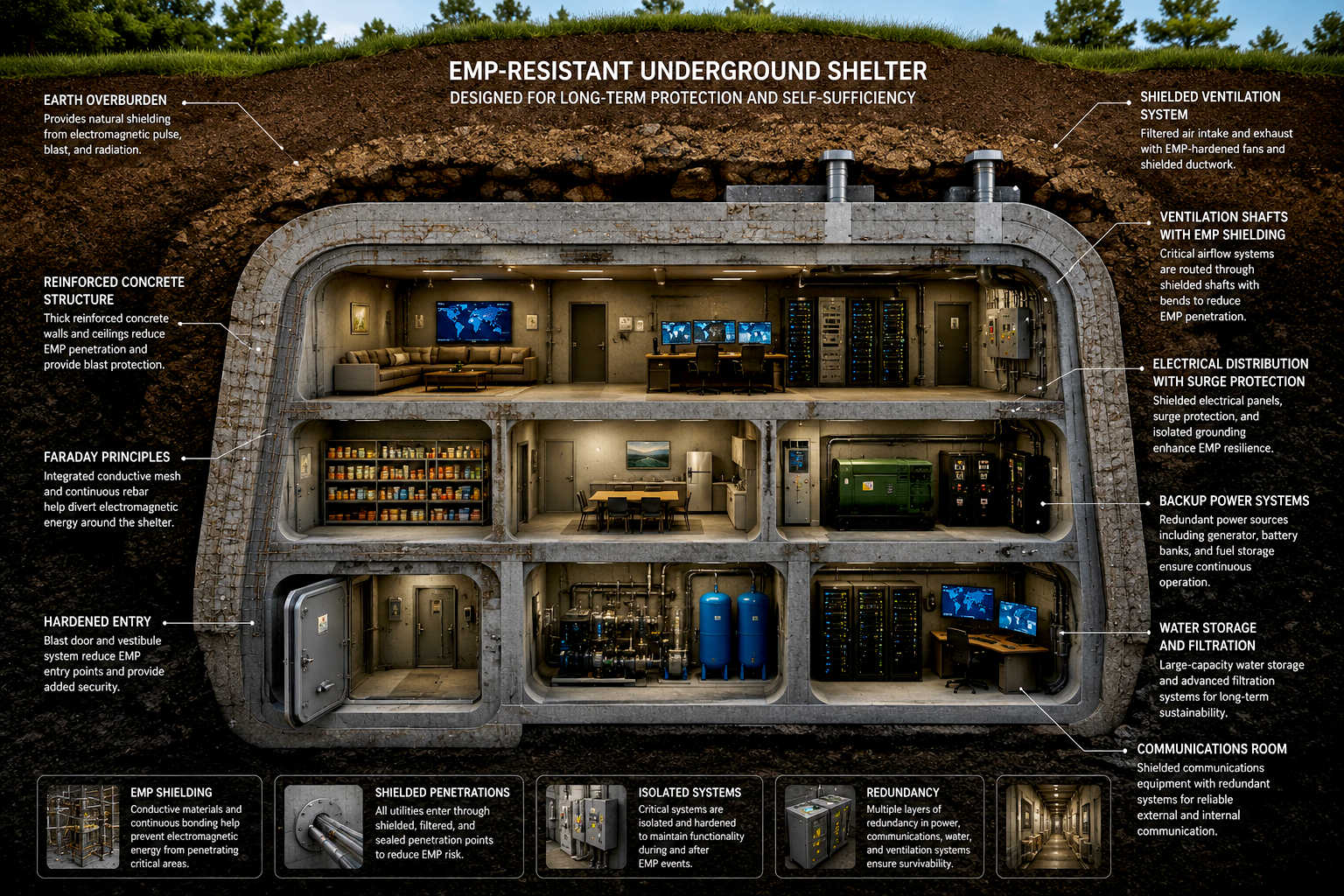
This means an underground shelter requires more than reinforced concrete walls. True EMP-resistant shelter systems require coordinated engineering across every major system within the structure. DHS has also published EMP shielding mitigation best practices for protecting critical assets from electromagnetic pulse threats.
At Dynamic Structural Integration, underground shelter planning focuses on integrated protection strategies designed to address real-world vulnerabilities.
Key Features of EMP-Resistant Underground Shelters
Reinforced Structural Shielding
A hardened underground shelter begins with reinforced construction. Thick concrete walls, steel reinforcement, and underground placement all contribute to reducing exposure to external threats.
However, shielding effectiveness depends on how the structure and connected systems are integrated together.
Shielded Power Systems
Power systems are among the most vulnerable components during an EMP event. Hardened underground shelters may include:
- Shielded electrical pathways
- Protected breaker systems
- Isolated backup power infrastructure
- Surge suppression equipment
These systems help reduce the risk of catastrophic electrical failure.
Hardened Communication Equipment
Communication systems play a critical role during emergencies. EMP-resistant shelters often include protected communication equipment designed to maintain operational capability when conventional systems fail.
Protected communication infrastructure may include:
- Shielded radios
- Hardened antenna systems
- Isolated communication rooms
- Redundant communication methods
Surge Suppression and Grounding
Proper grounding and surge suppression help control electrical surges that could damage sensitive systems.
Integrated grounding strategies may include:
- Shielded grounding pathways
- Controlled electrical isolation
- Protected equipment zones
Grounding alone is not sufficient for full EMP protection, but it remains an important component within a larger protection strategy.
Protected Ventilation and Filtration Systems
Ventilation systems create potential entry points for electromagnetic energy and environmental contaminants. Underground shelter ventilation systems designed for long-term protection often include shielded controls and hardened system components.
Ventilation planning must balance:
- Airflow requirements
- Filtration capability
- Electrical protection
- System reliability
Backup Power Redundancy
Long-term shelter protection depends on reliable backup power systems. Hardened shelters often incorporate multiple layers of redundancy to reduce system failure risks.
These may include:
- Isolated backup generators
- Protected battery storage systems
- Redundant electrical controls
- Independent power distribution pathways
How Faraday Cage Principles Apply to Underground Shelters
Faraday cage principles are often discussed in relation to EMP protection.
A Faraday cage is designed to distribute electromagnetic energy around an enclosure rather than allowing it to pass through protected contents inside. Public emergency guidance on protecting electronics from EMP effects also emphasizes shielding as one of the primary protection methods.
In underground shelter design, Faraday concepts may influence:
- Shielded room construction
- Protected equipment storage
- Electrical isolation strategies
- Reinforced conductive barriers
However, applying these principles within a large underground shelter environment requires professional engineering and system coordination. A shelter cannot rely on a simple surface-level solution if critical infrastructure remains exposed through connected systems.
Common Misconceptions About EMP Protection
Does Concrete Block EMP?
Concrete alone does not guarantee full EMP protection. Reinforcement methods, conductive materials, wiring systems, and connected infrastructure all influence overall shielding performance.
Does Being Underground Automatically Protect Electronics?
No. Underground placement may reduce some exposure, but sensitive electronics can still be damaged through conductive pathways and connected systems.
Can Generators Survive an EMP?
Some backup generators may remain functional after an EMP event, while others could fail depending on design, shielding, and exposure conditions.
Is EMP Protection Only Necessary for Military Facilities?
No. Property owners interested in long-term preparedness, communication continuity, and infrastructure resilience may also consider EMP-resistant shelter strategies.
Why Professional Shelter Engineering Matters
Underground shelter systems are complex environments where multiple systems must operate together under demanding conditions. Reinforced construction alone is not enough to provide long-term protection.
Professional underground bunker construction considers:
- Structural reinforcement
- Electrical shielding
- Ventilation system protection
- Communication system hardening
- Long-term survivability planning
Dynamic Structural Integration approaches underground shelter projects with a focus on engineered protection, integrated infrastructure, and real-world reliability.
Property owners exploring underground shelters should evaluate how systems work together rather than focusing on a single feature or isolated solution. For broader preparedness planning, Ready.gov offers guidance on how to prepare for extreme space weather before, during, and after major solar events.
Signs a Shelter Is Designed With EMP Protection in Mind
A professionally engineered underground shelter may include several indicators of EMP-focused design:
- Shielded electrical infrastructure
- Hardened communication systems
- Reinforced underground construction
- Surge suppression systems
- Protected ventilation controls
- Backup power redundancy
- Isolated equipment zones
- Integrated grounding systems
These features help strengthen operational resilience during large-scale infrastructure disruptions.
Why EMP Protection Matters for Long-Term Underground Shelters
Long-term underground shelters depend on functioning infrastructure to support safe occupancy. Without protected systems, even structurally sound shelters may lose critical capabilities during a severe electromagnetic pulse event.
Systems that may require protection include:
- Air filtration controls
- Water systems
- Lighting systems
- Communication equipment
- Medical equipment
- Backup power systems
This is why EMP protection is often discussed alongside underground survival planning and hardened shelter construction. NOAA’s Space Weather Prediction Center also explains how severe space weather can create space weather impacts on electric power transmission, reinforcing the importance of resilient backup systems.
FAQs
1. Can an underground shelter stop an EMP?
An underground shelter may reduce some exposure to electromagnetic energy, but true EMP protection requires engineered shielding systems, hardened infrastructure, and protected electrical pathways.
2. Does concrete protect against electromagnetic pulse?
Concrete may provide partial shielding benefits, but it does not guarantee full EMP protection without integrated shielding and hardened systems.
3. What electronics are most vulnerable to EMP events?
Communication systems, computers, electrical controls, vehicles with advanced electronics, and connected infrastructure are often among the most vulnerable systems.
4. Can underground bunkers protect communication systems?
Yes, if the shelter includes shielded communication equipment and hardened infrastructure designed for electromagnetic pulse protection.
5. What is the difference between EMP shielding and surge protection?
Surge protection helps reduce electrical spikes, while EMP shielding focuses on limiting electromagnetic energy exposure to protected systems.
6. Do underground shelters need Faraday cage protection?
Some shelters incorporate Faraday cage principles as part of broader EMP-resistant design strategies.
7. Can solar storms damage underground shelter systems?
Severe solar events can disrupt power infrastructure and communication systems, which may affect unprotected underground shelter systems.
8. Are backup generators vulnerable to EMP attacks?
Yes. Some generators may fail if they are not protected through hardened electrical infrastructure and shielding methods.
9. What makes a shelter EMP-resistant?
EMP-resistant shelters use integrated shielding strategies, hardened infrastructure, protected communication systems, and reinforced electrical protection methods.
10. Is EMP protection important for long-term underground shelters?
Yes. Long-term underground shelters rely on functioning electrical, communication, ventilation, and support systems that may be vulnerable during an EMP event.
Protection Means More Than Going Underground
Underground construction can provide important advantages during extreme events, but depth alone does not guarantee electromagnetic pulse protection. Real EMP resistance depends on coordinated engineering, hardened infrastructure, shielded systems, and long-term planning.
As interest in custom underground shelters continues to grow, more property owners are recognizing the importance of integrated protection strategies that address structural strength, communication continuity, ventilation reliability, and electrical resilience together.
Effective underground shelter design requires more than reinforced walls. It requires systems built to function when modern infrastructure becomes unstable.
Build an Underground Shelter Designed for Real-World Threats
Dynamic Structural Integration designs and builds custom underground shelters engineered for durability, protection, and long-term performance. From reinforced structural systems to advanced ventilation planning and hardened infrastructure considerations, every project is approached with real-world conditions in mind.
If you are exploring underground shelters, underground bunker construction, or long-term protection strategies, our team is here to help.
Call Dynamic Structural Integration at 619-252-7186, send us an email, or fill out our web form to start planning your underground shelter project today.