
What Nuclear War Simulation Reveals
About the Fragility of Modern Civilization
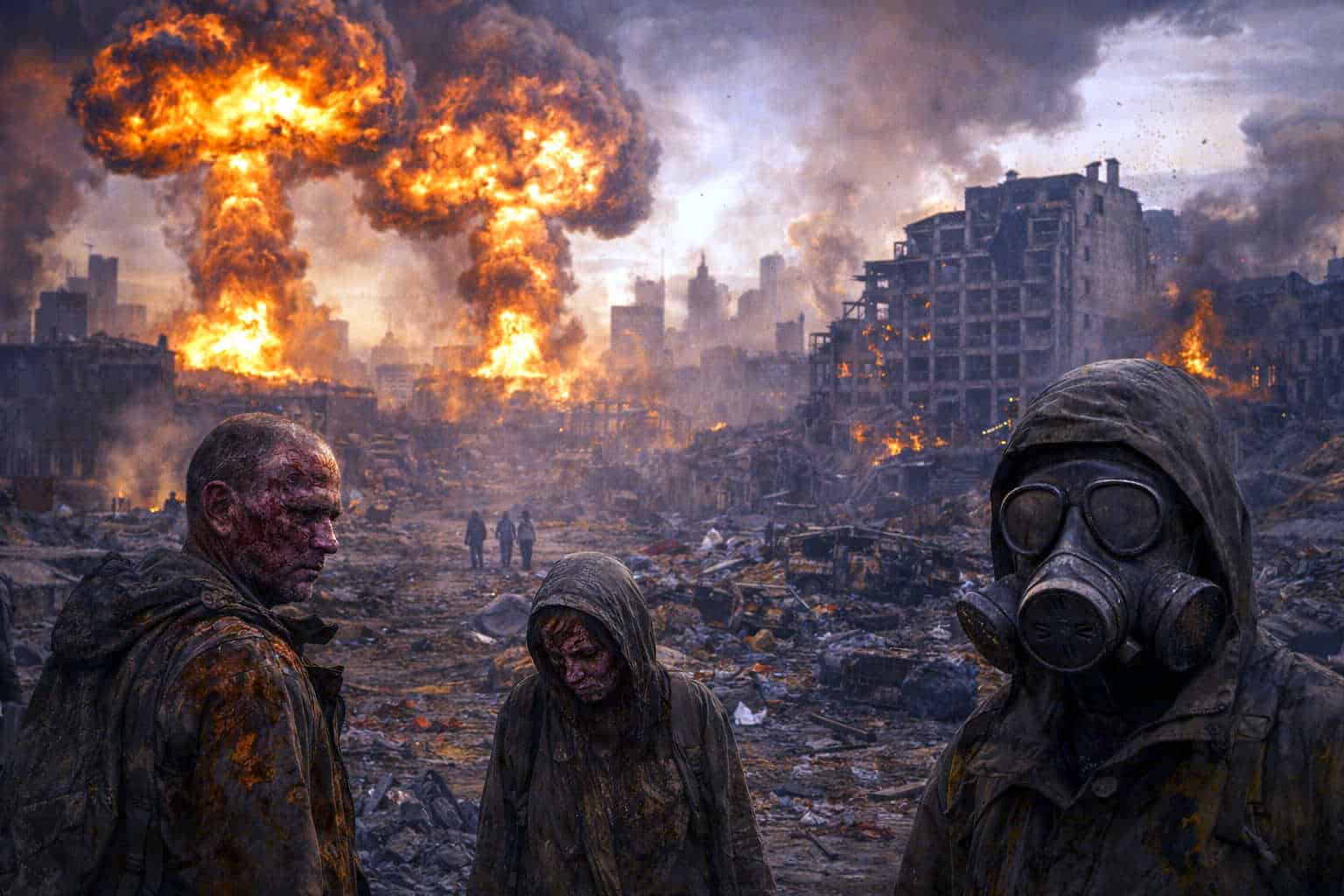
A Reality Few Are Ready to Confront
Few tools confront modern society with its own vulnerability as the simulation of nuclear war does. These models do not speculate for entertainment. They strip away optimism and expose how thin the margin is between stability and collapse. Power grids, food systems, transportation networks, and governance structures appear strong in isolation. Under simulated nuclear conditions, they fail in sequence. What starts as a military exchange soon turns into a civilian crisis. It affects millions of lives and leads to decades of recovery that never completely happens.
Nuclear war simulation forces an uncomfortable truth into focus. Modern civilization depends on interlocking systems that lack resilience under extreme stress. The simulations show that destruction does not stop at blast zones. It spreads through supply chains and climate patterns. Decision systems also face challenges. These systems were not built to handle such large disruptions. These findings are not dramatic warnings. They are sober assessments drawn from data, physics, and historical precedent.
Why Governments Model the Unthinkable
Governments, researchers, and analysts use nuclear war simulations to test assumptions that policy alone cannot answer. These simulations combine nuclear warfare modeling, population impact estimation, and escalation scenario analysis. Once certain thresholds are crossed, the reality of control slips away fast. Even limited nuclear exchange scenarios reveal cascading failures that resist containment. Strategic deterrence simulation often assumes rational decision-making under pressure. The models challenge that assumption. Accidental nuclear war modeling and unauthorized launch risk appear more often than many expect.
Historical Cold War simulations and modern thermonuclear exchange modeling reach the same conclusion. Recovery does not mean a return to normal. Nuclear winter prediction shows cooling temperatures that strain food systems. Damaged infrastructure and mass displacement lead to prolonged instability. Dynamic Structural Integration understands how systems behave under extreme stress. The lessons from nuclear war simulation echo a broader reality. Complex systems fail when pushed beyond their design limits.
Key Findings From Nuclear War Simulation
- Civilian Infrastructure Fails to Meet Military Objectives
- Blast And Fallout Effects Extend Far Beyond Target Zones
- Population Impact Estimation Reveals Immediate Mass Casualties
- Strategic Deterrence Simulation Breaks Down Under Time Pressure
- Escalation Scenario Analysis Shows Rapid Loss Of Control
- Atmospheric Transport Modeling Spreads Fallout Across Borders
- Humanitarian Impact Modeling Exposes Medical System Collapse
- MIRV Accuracy And Targeting Increase Civilian Risk
- Nuclear Exchange Scenarios Trigger Global Supply Chain Failure
- Counterforce Vs Countervalue Simulation Shows No Safe Strategy
- Nuclear Winter Prediction Alters Global Food Production
- Probabilistic Risk Assessment Undermines Confidence In Safeguards
- Civil Defense Preparedness Proves Insufficient At Scale
- Decision-Making In Nuclear Conflict Degrades Under Stress
- Historical Cold War Simulations Mirror Modern Outcomes
- Preventive Nuclear War Scenarios Escalate Faster Than Expected
- Unauthorized Launch Risk Persists Despite Safeguards
- Strategic Force Structure Analysis Reveals System Fragility
- Emergency Response Simulation Shows Delayed Aid Delivery
- Simulation Of Long-Term Survival Remains Uncertain
Expository Analysis of Key Findings
Civilian Infrastructure Fails to Meet Military Objectives
Nuclear war simulation shows that power, water, and communication systems fail early. Strategic objectives are not achieved before these systems collapse. Once infrastructure fails, civilian survival becomes the dominant concern.
Blast And Fallout Effects Extend Far Beyond Target Zones
Blast and fallout effects spread through atmospheric transport modeling. Cities outside direct strike zones suffer contamination. These effects complicate emergency response and long-term survival.
Population Impact Estimation Reveals Immediate Mass Casualties
Population impact estimation shows how dense urban environments magnify loss. Casualty figures rise faster than emergency systems can respond. Nuclear war simulation removes uncertainty from these projections.
Strategic Deterrence Simulation Breaks Down Under Time Pressure
Strategic deterrence simulation assumes measured decision-making. Escalation risk factors compress timelines. Mistakes become irreversible.
Escalation Scenario Analysis Shows Rapid Loss Of Control
Escalation scenario analysis demonstrates how limited exchanges expand. Each response narrows remaining options until control collapses.
Atmospheric Transport Modeling Spreads Fallout Across Borders
Atmospheric transport modeling shows that fallout ignores borders. Neutral regions experience contamination without direct involvement.
Humanitarian Impact Modeling Exposes Medical System Collapse
Humanitarian impact modeling reveals hospitals overwhelmed within hours. Radiation injuries and supply shortages exceed capacity.
MIRV Accuracy And Targeting Increase Civilian Risk
MIRV accuracy and targeting improve strike effectiveness while increasing collateral damage. Civilian exposure rises.
Nuclear Exchange Scenarios Trigger Global Supply Chain Failure
Nuclear exchange scenarios disrupt shipping, agriculture, and manufacturing. Global casualty estimation rises as shortages spread.
Counterforce Vs Countervalue Simulation Shows No Safe Strategy
Counterforce vs countervalue simulation removes the illusion of precision. Both strategies result in civilian catastrophe.
Nuclear Winter Prediction Alters Global Food Production
Nuclear winter prediction models show reduced sunlight and cooling temperatures. Crop yields decline across continents.
Probabilistic Risk Assessment Undermines Confidence In Safeguards
Probabilistic risk assessment exposes failure probabilities within safeguards. Zero-risk assumptions collapse.
Civil Defense Preparedness Proves Insufficient At Scale
Civil defense preparedness plans fail under realistic conditions. Evacuation and shelter strategies cannot match event scale.
Decision-Making In Nuclear Conflict Degrades Under Stress
Decision-making in nuclear conflict deteriorates as information quality declines. Leaders act with incomplete data.
Historical Cold War Simulations Mirror Modern Outcomes
Historical Cold War simulations align with modern models. Technology evolves, but outcomes remain consistent.
Preventive Nuclear War Scenarios Escalate Faster Than Expected
Preventive nuclear war scenarios show rapid retaliation cycles. Initial intent becomes irrelevant.
Unauthorized Launch Risk Persists Despite Safeguards
Unauthorized launch risk remains present. Human error and system failure intersect.
Strategic Force Structure Analysis Reveals System Fragility
Strategic force structure analysis highlights interdependence. Damage to one node affects the entire system.
Emergency Response Simulation Shows Delayed Aid Delivery
Emergency response simulation shows aid delayed by infrastructure loss. Assistance arrives too late for many.
Simulation Of Long-Term Survival Remains Uncertain
Simulation of long-term survival lacks confidence. Environmental and social variables resist prediction.
Additional Resources for Your Consideration
🔬 Nuclear War Simulation & Modeling (Primary Authority)
Princeton University Nuclear Futures Lab: https://sgs.princeton.edu/the-lab/simulating-nuclear-war
NUKEMAP: https://nuclearsecrecy.com/nukemap/
🌍 Humanitarian & Civilian Impact
Physicians for Social Responsibility: https://psr.org/issues/nuclear-weapons-abolition/
☢️ Environmental & Climate Effects (Nuclear Winter)
National Center for Atmospheric Research: https://opensky.ucar.edu/islandora/object/articles%3A43663
🛡️ Surving Nuclear Fallout
Underground Shelters & Nuclear Bunkers
FAQs
1. What is a nuclear war simulation?
Nuclear war simulation is a modeling process used to study the effects of nuclear conflict. It combines physics, demographics, and systems analysis.
2. Why do governments rely on nuclear war simulation?
Governments use nuclear war simulations to assess risk, test deterrence assumptions, and plan emergency responses.
3. Does nuclear war simulation account for civilian impact?
Yes. Population impact estimation and humanitarian impact modeling are core components.
4. How accurate are nuclear war simulations?
They rely on validated data but cannot predict human behavior with certainty.
5. What role does nuclear winter prediction play?
Nuclear winter prediction evaluates climate effects following large-scale nuclear exchanges.
6. Can nuclear war simulation prevent conflict?
It clarifies consequences. Prevention depends on leadership decisions.
7. Are accidental launches included in simulations?
Yes. Accidental nuclear war modeling and unauthorized launch risk are included.
8. How does escalation scenario analysis work?
It models how responses trigger further actions under compressed timelines.
9. What does simulation say about recovery?
Simulation of long-term survival shows recovery remains uncertain and uneven.
10. Who uses nuclear war simulation outside government?
Researchers, universities, and risk analysts use these tools.
What These Simulations In the Final Analysis Tell Us
Nuclear war simulation delivers a consistent message. Modern civilization lacks resilience under extreme stress. Systems fail faster than expected. Environmental damage, human loss, and institutional collapse reinforce one another. These models define boundaries that should not be crossed. Dynamic Structural Integration studies systems under pressure and understands the cost of failure. Design without resilience invites collapse.
When Understanding Risk Becomes Responsibility
Complex risks demand serious analysis. Dynamic Structural Integration helps organizations identify weaknesses, plan for system failure, and build resilience under extreme conditions. Whether facing environmental stress, infrastructure risk, or long-term system integrity challenges, informed decisions matter.
For deeper insight, contact Dynamic Structural Integration. Call 619-252-7186, send an email, or fill out our web form. Understanding risk today shapes survival tomorrow.